
2026-10-03 · Brandon
How to Stop Condensation in Broken Arrow Metal Shops and Buildings
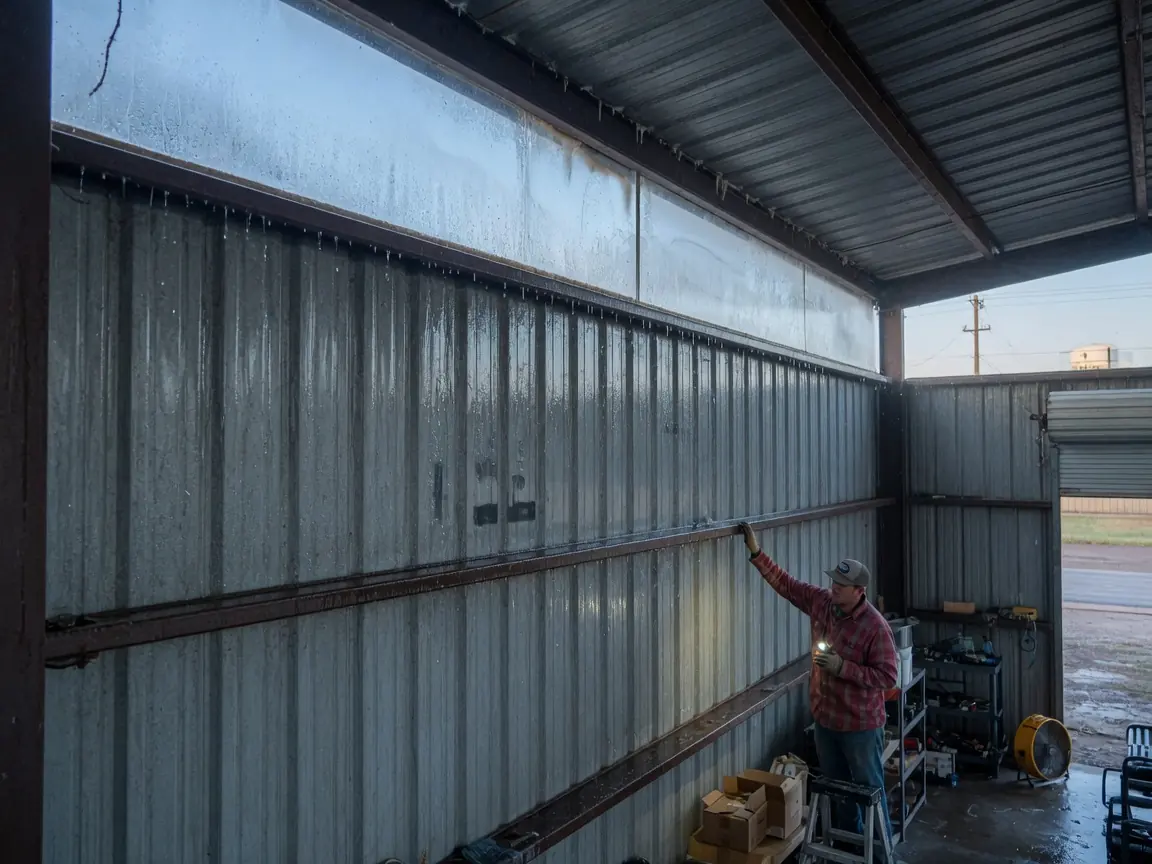
Closed-cell spray foam applied directly to the interior metal surfaces stops condensation in Broken Arrow metal shops and buildings by forming an airtight thermal barrier that keeps warm moist air away from cold metal. In Tulsa County the humid subtropical climate brings hot summers with high moisture levels and mild winters that still produce enough temperature difference for sweat to form on uninsulated panels. Shops in neighborhoods such as Lynn Lane and other Broken Arrow neighborhoods often see this problem worsen on north-facing walls where overnight cooling lingers into the morning.
How Condensation Forms on Local Metal Buildings
Metal panels heat and cool faster than wood or masonry so they drop below the dew point when interior air holds the moisture typical after a summer rain in Broken Arrow. Buildings near Ray Harral Nature Park or along the edges of Forest Ridge sit on flatter terrain that traps humidity longer than the rolling ground closer to Bixby. Older shops in Downtown Broken Arrow frequently lack any vapor control allowing air infiltration through seams and fasteners that accelerates drip formation once the metal temperature falls.
The same pattern appears in Coweta and Tulsa facilities where large overhead doors cycle open during the day and let in moist air that later condenses on the roof deck overnight. Without a continuous insulation layer the metal acts as a cold plate pulling water out of the air and sending it onto stored equipment or concrete floors.
Why Closed-Cell Spray Foam Prevents the Problem
Closed-cell spray foam adheres directly to metal and expands to seal every seam fastener and penetration creating both insulation and a vapor barrier in one step. The material maintains performance through the hot humid summers and the occasional winter cold fronts that reach Broken Arrow so the metal surface stays closer to interior air temperature. In commercial buildings this single application often reduces visible moisture within the first cooling season after installation.
Compared with fiberglass batts that leave air gaps and absorb water the foam stays rigid and does not sag over time on vertical walls or overhead decking. Shops in other Broken Arrow neighborhoods and along the Bass Pro Shops corridor have used this method on both new construction and retrofit projects because the foam conforms to corrugated profiles without extra fasteners.
Application Steps for Broken Arrow Shops
- Inspect the metal for existing rust or loose panels and address those issues first.
- Mask doors windows and electrical boxes to protect finishes.
- Apply a 2-inch lift of closed-cell foam to walls then return for a second lift to reach 3 to 4 inches total thickness on the roof deck.
- Trim any overspray and verify the surface is continuous before reinstalling trim or fixtures.
This sequence works equally well on buildings in nearby Bixby or Coweta where crews face the same humidity loads.
Long-Term Performance in Tulsa County Conditions
Once installed the foam continues to block air movement even after years of door traffic and seasonal expansion of the metal frame. Shops that add the insulation report drier floors and fewer corrosion spots on stored tools within the first year. For readers considering options in new construction the comparison in Spray Foam vs Fiberglass for New Construction in South Broken Arrow shows how the same material choice affects metal buildings.
Regular visual checks twice a year catch any rare punctures from equipment impact before moisture can re-enter. The result is a shop interior that stays usable year-round without the slick surfaces and musty smell that condensation brings to uninsulated metal in Broken Arrow.