
2026-10-03 · Brandon
Why Your Broken Arrow Bonus Room Stays Hot and How Spray Foam Fixes It
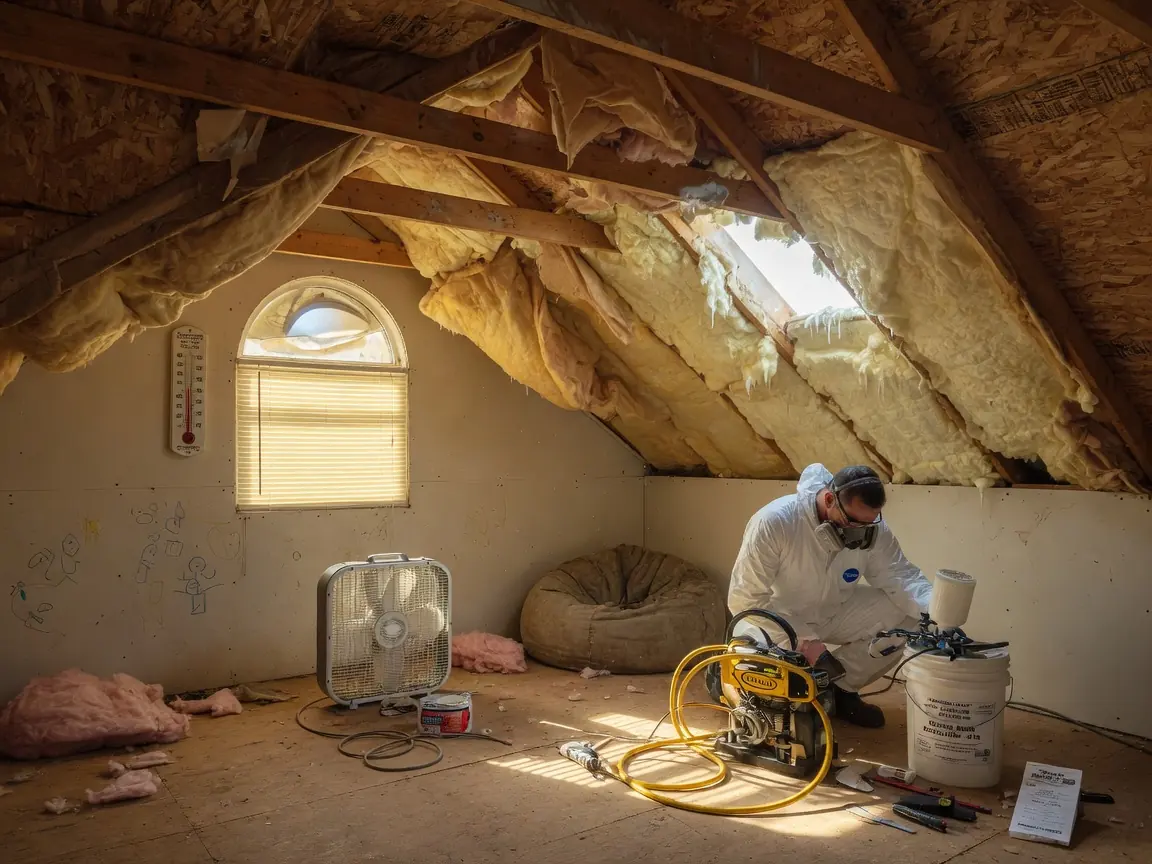
Bonus rooms in Broken Arrow stay hot primarily because they sit above uninsulated garages or under vented attics where air leaks allow heat buildup from the humid subtropical climate. Spray foam insulation fixes this by expanding to fill gaps and create a continuous barrier that blocks heat transfer in homes throughout Tulsa County.
Heat Sources in Broken Arrow Bonus Rooms
Homes in neighborhoods such as Lynn Lane, and Forest Ridge often feature bonus rooms added over garages or in attics of single-family houses built decades ago. These spaces receive direct sun exposure during hot summers while mild winters still allow temperature swings that push heat upward from living areas below. The region's humidity adds moisture that can worsen air infiltration around seams and penetrations. In areas near Downtown Broken Arrow or other Broken Arrow neighborhoods, older rooflines and standard fiberglass batts leave voids where conditioned air escapes. Residents in nearby Bixby and Coweta report similar patterns because the same housing stock and weather patterns extend across Tulsa County. Without a sealed layer, these rooms can feel 15 to 20 degrees warmer than the rest of the house on peak summer days.
How Closed-Cell Spray Foam Stops Heat Gain
Closed-cell spray foam adheres directly to roof decking and garage ceilings, forming a rigid layer that stops both air movement and radiant heat. In Broken Arrow applications, technicians apply it at 2 to 3 inches thick to achieve the needed thermal resistance while also managing moisture from the humid climate. This approach works especially well in homes near Ray Harral Nature Park where tree cover varies and some bonus rooms face south or west exposure. Unlike loose-fill materials that settle over time, the foam stays in place and maintains contact with surfaces. Property owners in Lynn Lane and Forest Ridge have seen stable room temperatures after treatment because the material blocks the stack effect that pulls hot air from lower levels. The result is less reliance on window units or portable coolers during July and August peaks.
Installation Steps for Local Homes
Technicians begin by inspecting the bonus room ceiling or attic floor for existing insulation, wiring, and ventilation paths common in Broken Arrow construction. They then mask fixtures and apply the foam in passes, building thickness gradually to avoid overspray on walls or floors. In metal-roof homes found in some other Broken Arrow neighborhoods properties, extra care goes into sealing around trusses where condensation can form. Work typically occurs during weekday mornings to align with the shop's Mon–Fri 8am–6pm schedule or Saturday slots from 9am–2pm. After curing, the surface can receive drywall or other finishes without affecting performance. This process suits both newer builds near Bass Pro Shops and older stock in North Broken Arrow.
Long-Term Performance in Tulsa County Conditions
Once installed, spray foam maintains its seal through repeated summer heat and occasional winter freezes that affect homes from Coweta to Bixby. It resists settling that occurs with other insulations in the area's variable humidity. Homeowners often combine it with attic spray foam insulation for full coverage or garage spray foam insulation when the bonus room sits directly above vehicle storage. For older properties, the article on attic spray foam in North Broken Arrow homes offers additional context on compatibility with existing structures. The material also reduces dust and pollen entry, which matters in neighborhoods close to Ray Harral Nature Park trails. Regular visual checks every few years confirm the foam remains intact without degradation from local conditions.